
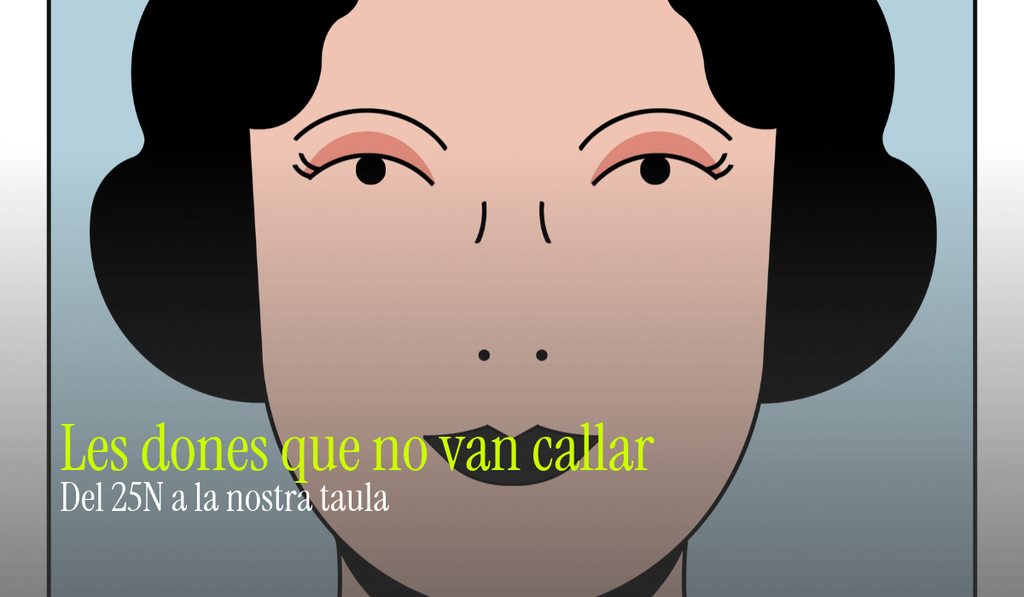
Illustration by Margarida Xirgu: Nadia Hasid, Convit/e Magazine No. 0
Every November 25, we remember the women who were silenced. In issue 0 of Convit/e, we already told the stories of two of them—Sonia Pierre and Margarida Xirgu—after whom dishes at our restaurants are named. We return to these stories to reflect on the intersecting forms of violence.
Two à la carte dishes
In September 2022, Issue 0 of Convit/e dedicated its “Cooking” section to an idea that was born in our own kitchens: the dishes at Mescladís restaurants were named after women activists, fighters, and role models for the project. It wasn’t just a decorative touch: each name told a story that came to life at the table.
Two of these stories open the section. Sonia Pierre (Villa Altagracia, 1963–2011) was born in a Dominican batey, the daughter of Haitian immigrants, in a community to which the state denied citizenship. She founded the Movement of Dominican-Haitian Women (MUDHA) and dedicated three decades to defending the rights of the Dominican population of Haitian origin.
Margarida Xirgu (Molins de Rei, 1888 – Montevideo, 1969), an actress and director who also staged plays by Federico García Lorca. She was on tour in Latin America when the Civil War broke out. She never returned. She died in Montevideo, in exile—a fate she reportedly considered the most terrible of punishments.
Sonia Pierre inspired us to make a sandwich with shredded chicken, avocado, cheese, and chili mayonnaise on glass bread. Margarida Xirgu inspired a dish with vegetables, quinoa, and romesco sauce. Two recipes to honor two lives.
The Intersecting Forms of Violence
Both of them experienced a form of violence that we don’t always call “25N”: that of a state that declares you a foreigner in your own country, and that of a regime that expels you for being a woman, a republican, a lesbian, and a free person.
In their lives, these forms of violence did not occur in isolation: being a woman compounded their origins, skin color, poverty, beliefs, or ways of loving—and each factor intensified the others. Today we call this interplay “intersectionality”; they experienced it in their bodies long before the word even existed.
Sonia Pierre summed it up with a question she’s been asking since she was a child: “Why not us?” And in a statement she directed at those who accused her of attacking her country: “I don’t criticize my country; I criticize its government, and I have every right to do so.” Margarida Xirgu put it another way, through her actions, throughout her entire life. Neither of them accepted the place that had been reserved for them.
Gifts from November 25
November 25 stems precisely from this intersection. The date commemorates Patria, Minerva, and María Teresa Mirabal, activists assassinated on November 25, 1960, by the Trujillo dictatorship in the Dominican Republic—the very country where Sonia Pierre was born. In 1981, the First Latin American and Caribbean Feminist Conference, held in Bogotá, proposed commemorating them on that day. The United Nations made it an official observance in 1999.
In other words, the day we are dedicating today to violence against women originated from a political crime. The Mirabal sisters were murdered because they were women who refused to remain silent in the face of a dictatorship.
The 1993 UN Declaration on the Elimination of Violence against Women already recognized this: violence does not occur only at home; it can also be perpetrated or tolerated by the state. Recalling this in no way detracts from the fight against gender-based violence, which remains urgent. It broadens it.
Because today there are also women for whom asking for help is more difficult: those without papers, those who work as domestic workers without a support network, those who have fled a country that persecutes them. Their names do not appear in the photo from November 25.
Memory Is Also Cooking
At Mescladís, memories aren’t kept in a drawer. Anyone who ordered the Sonia Pierre dish or the Margarida Xirgu dish also took home a story.
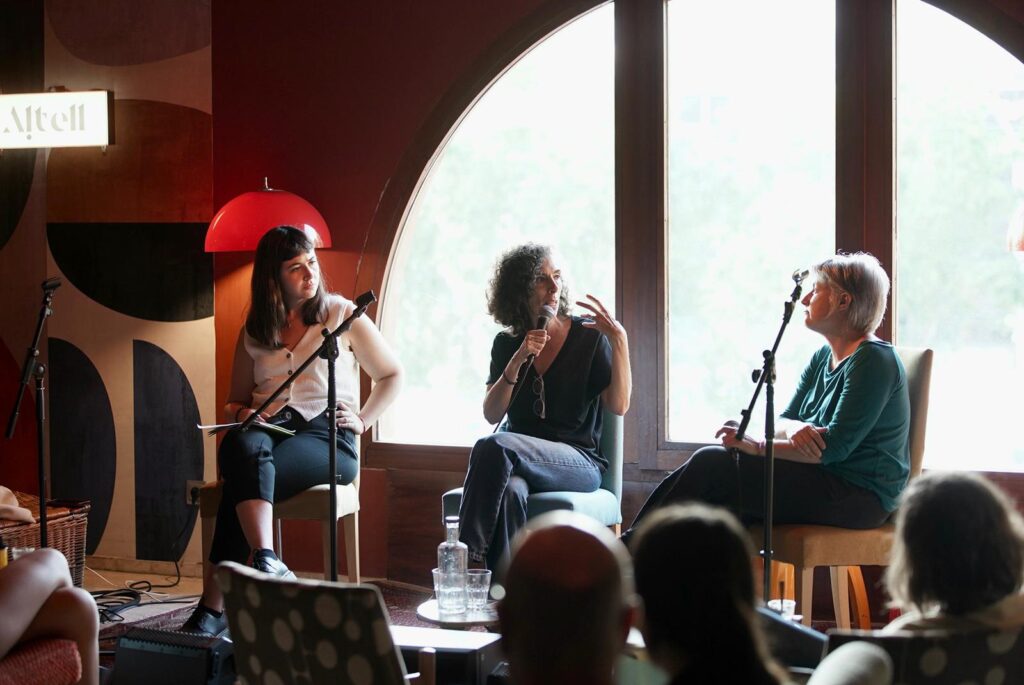
Through its cultural production arm, Convit/e continues to ask the same questions it posed in Issue 0. Issue 8, dedicated to kintsugi—the Japanese art of repairing broken objects while making the cracks visible—examined social fractures as a starting point for building more just communities.
This world also spills out onto the streets. Massa Mare, our theatrical gathering, has filled Barcelona’s Margarida Xirgu Square more than once. We like to think this is no coincidence: the actress who died far from home lends her name to the place where voices, bodies, and cuisines from very diverse backgrounds have come together. Just like in the great sea, what brews there is community.
Names That Won't Be Erased
Les Mirabal, Sonia Pierre, Margarida Xirgu. Women who were silenced but who continue to speak out. This November 25, at our table, there is a place for their names as well.
We share a table. We share memories.
SHARE
The most read
Other articles
Become a member
Become a Mescladís member and support our initiatives for a more inclusive and cohesive community.