
Live, work, and pay social security contributions… but what about voting?
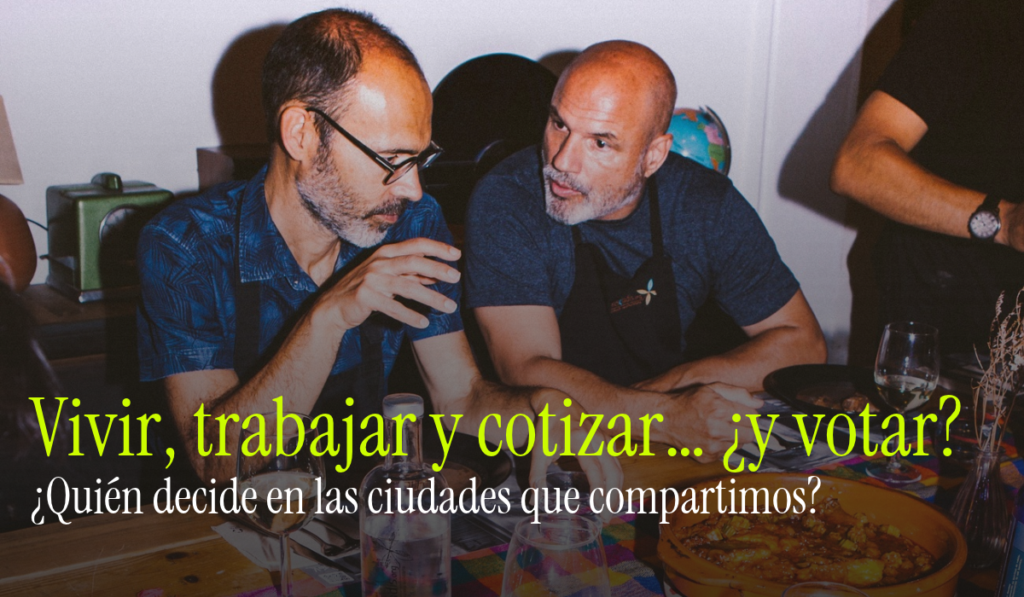
With the November 29 elections just around the corner, we revisit a reflection from our first Convit/e to ask ourselves who makes the decisions in the cities we share.
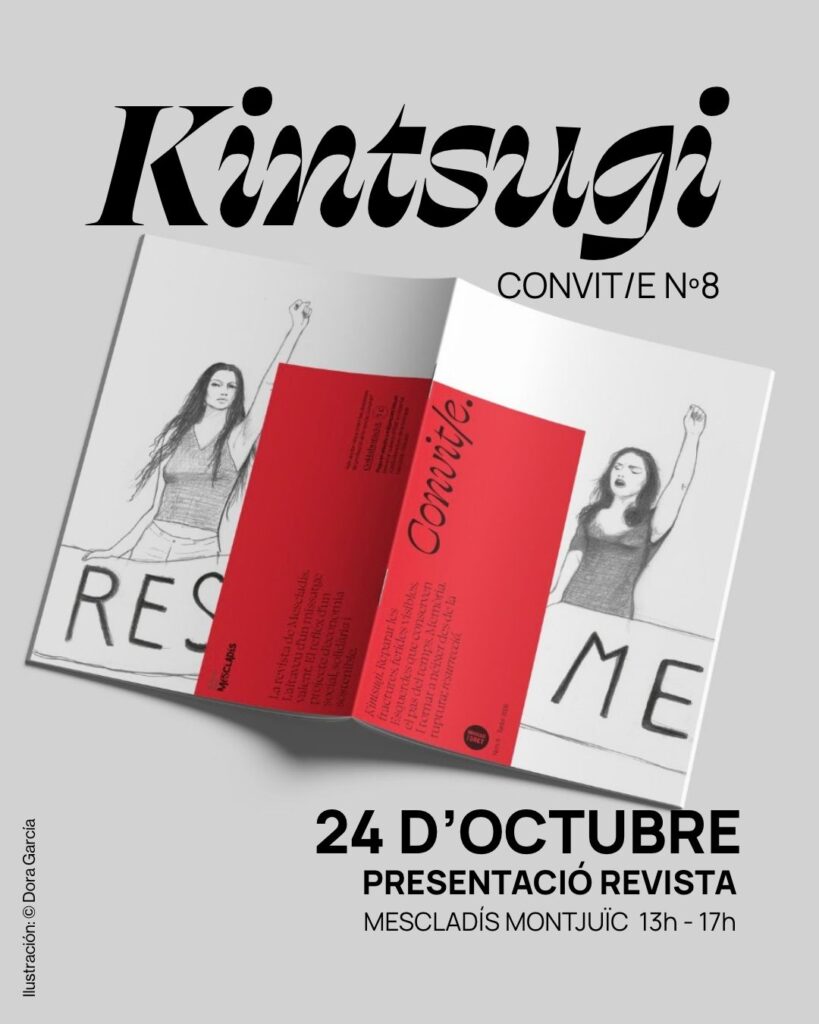
In September 2022, we published Issue 0 of Convit/e. On the cover was a simple yet unsettling phrase: “Migration is a right.” In the editorial, we made a further commitment: to call things by their proper names, because when we talk about migration, euphemisms end up distorting reality and making what is unjust seem just.
Four years later, with two elections ahead, that promise remains a good starting point. Let's begin, then, with the facts.
What the Law Says Today
In the general election on November 29, 2026, only people with Spanish citizenship may vote. This is established in Article 13.2 of the Constitution. People who have lived here for years, work here, and contribute to their neighborhood cannot participate in that election.
In the municipal elections on May 23, 2027, the eligibility criteria are somewhat broader. European Union citizens who are registered to vote and of legal age may vote. So may citizens of countries with reciprocity agreements: Bolivia, Cape Verde, Chile, Colombia, South Korea, Ecuador, Iceland, Norway, New Zealand, Paraguay, Peru, the United Kingdom, and Trinidad and Tobago.
In the latter case, there are certain requirements: a residence permit, five years of legal and uninterrupted residence (three years for Norway and the United Kingdom), registration with the municipal registry, and registration on the voter rolls for each election.
For everyone else, residency alone does not grant the right to vote, not even in the municipality where they live. Today, that right depends less on how long someone has been here than on the type of passport they hold.
A question we were already asking ourselves in 2022
In that issue, political scientist Gemma Pinyol-Jiménez, a specialist in migration policy and diversity, authored “Convivència en la diversitat.” Her article begins by reminding us of something that should go without saying: migration has always been a part of our history. With the emergence of nation-states came terms such as “outsider” or “foreigner,” and with them, spaces where newcomers had fewer rights than those who had never left their homeland.
His fundamental observation remains valid. Democracies were built on equal rights, and nationality, he reminded us, is largely a matter of chance: no one chooses where they are born. Hence his most oft-quoted line: “Today, we must be outraged that there are people who live, work, and pay taxes in our cities yet have no right to vote.”
Pinyol-Jiménez also pointed out that public debate tends to swing between two extremes: fear, which can lead to hatred, and compassion, which can lead to paternalism. Talking about participation takes us out of that dilemma. It is not a matter of fear or of granting favors, but of asking ourselves who is part of the conversation about the common good.
Calling a Spade a Spade
We talk about “residents,” “foreigners,” and “groups.” But behind those labels are neighbors, coworkers, shopkeepers, and cooks. At Mescladís, we see this every day: People who pay taxes, who care for others, who start businesses, and who, in many cases, watch from the sidelines on election day.
Our very name is a statement of principles. “Mescladís” comes from the Aranese language and means “that can be mixed.” We chose a minority language because we believe that the quality of a democracy is measured by how it treats its minorities. And a democracy is enriched when it listens to all the people who live in it.
What Can We Do?
If you can't vote yet, registering to vote is the first step: it's the foundation for almost every administrative process. Check whether your citizenship allows you to vote in municipal elections, and if so, make sure you meet the deadlines. If you're interested, find out about the requirements for obtaining citizenship as well.
If you can vote, there’s something everyone can do: ask questions, listen, and include those who can’t vote in conversations in the neighborhood, at work, or on the staircase. We may not agree on the answers, but the question deserves an honest, fearless conversation.
At Convit/e, we learned that “convidar” means making room at the table. We share a table. Let’s also share the conversation.
SHARE
The most read
Other articles
Become a member
Become a Mescladís member and support our initiatives for a more inclusive and cohesive community.