
Special Regularization in Spain: Everything You Need to Know.
New law to regularize your status in Spain.
Deadline: June 30, 2026.
If you are in Spain without legal status, or know someone who is, this information is important. On April 16, 2026, Royal Decree 316/2026 went into effect, a regulation that provides an extraordinary pathway for thousands of people to regularize their administrative status. The deadline for submitting an application is June 30, 2026.
Before we begin, we want to be honest: this law is very new, and both organizations and the government are still adjusting to it. It’s normal for questions to arise. That’s why our first recommendation is the same for everyone: patience.
Read the information carefully, take your time gathering the necessary documents, and seek assistance from a specialized organization before submitting anything.
Special Regularization Program for Migrants (state website)
Who is eligible to apply for extraordinary regularization?
Royal Decree 316/2026 covers two groups of people:
Group 1: Individuals who have filed an application for international protection before January 1, 2026.
Group 2: Individuals who were in an irregular administrative status in Spain prior to January 1, 2026.
Group 1: Applicants for international protection (Additional Provision 20)
Requirements for applying for international protection and personal circumstances
To access this route, a person must:
Having filed an application for international protection before January 1, 2026. Both a statement of intent and a formal application submitted to the authorities are accepted.
In addition, you must meet the following personal requirements:
- Be of legal age.
- Be in Spain at the time of submitting the application.
- Not holding a valid visa or residence permit.
- Not have any pending application for the issuance, extension, renewal, or modification of a stay or residence permit.
- Not be a holder of, nor have applied for, temporary protection under the protection scheme for Ukrainian nationals.
- Please provide a complete copy of your passport, registration card, or travel document. Both valid and expired documents are accepted.
Requirements for staying in Spain
Have resided in Spain continuously for the five months prior to submitting the application. Both private and public documents bearing the applicant’s name are accepted.
Criminal record requirements
Have no criminal record in Spain or in any country where the applicant has legally resided during the five years prior to the date of entry into Spain.
Important: Criminal records that are eligible for expungement in Spain will not be taken into account. If the individual has a record that is eligible for expungement, they must request expungement from the Ministry of the Presidency, Justice, and Relations with the Courts before their case is resolved. It is advisable to initiate this expungement process well in advance, rather than waiting until the proceedings are well underway.
Other requirements
- Regarding public order and criminal records: The applicant must not pose a threat to public order, safety, or public health. This is assessed based on two factors: a criminal background check and a police report. Important: Having a record in the police report does not automatically result in a denial. The authorities will evaluate each case individually, taking into account the applicant’s specific circumstances.
- Regarding the Schengen Area: Not be listed as a person subject to refusal of entry in countries with which Spain has agreements to that effect.
- Regarding the non-return period: Not being subject to a non-return commitment to Spain (in the context of voluntary return).
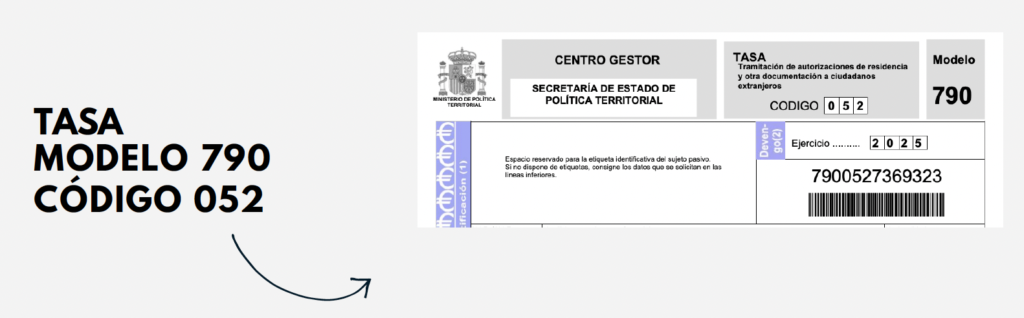
- Regarding payment of the fee: You must have paid the applicable processing fee. The amount is 38.28 euros (Form 790, code 052).
Required documentation for Group 1
- A complete copy of your passport, registration card, or travel document (whether valid or expired).
- A criminal record certificate from the country of origin and/or from any countries where the applicant has resided during the five years prior to the date of entry into Spain.
- Proof of filing an application for international protection before January 1, 2026.
- Red card, if there is one.
- Public or private documents proving residency during the five months prior to the submission of the application, including the applicant’s personal information (first name, last name, and ID number).
- Certificate of historical residency, if available.
- Proof of enrollment for minor children, if applicable.
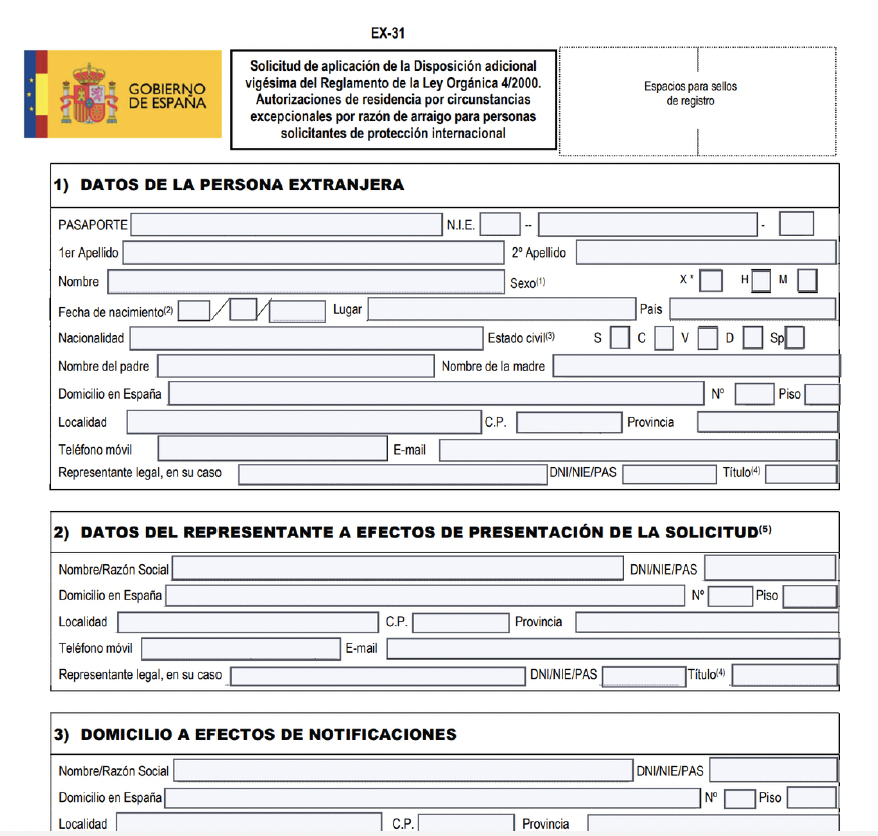
- Form EX-31.
- Form 790, code 052 (38.28 euros).
Group 2: Individuals in an irregular situation (Additional Provision 21)
General Requirements
To access this route, a person must:
- Have been in Spain before January 1, 2026.
- Be of legal age.
- Be in Spain at the time of submitting the application.
- Not holding a valid visa or residence permit.
- Not have any pending application for the issuance, extension, renewal, or modification of a stay or residence permit.
- Not be a holder of, nor have applied for, temporary protection under the protection scheme for Ukrainian nationals.
- Please provide a complete copy of your passport, registration card, or travel document (whether valid or expired).
- Have resided in Spain continuously for the five months prior to submitting the application. Both private and public documents bearing the applicant’s name are accepted.
- You must not have a criminal record in Spain or in any country where you have legally resided during the five years prior to your date of entry into Spain. Expunged convictions will not be taken into account.
The requirements regarding public order, the Schengen Area, the non-return period, and the payment of fees are the same as those for Group 1.
Additional requirement: at least ONE of these three criteria
In addition to the general requirements, the individual must meet at least one of these three criteria:
Option A — Employment Relationship
Have worked in Spain (as an employee or self-employed) during their stay, or demonstrate their intention to work by:
- An employment contract (as an employee), or
- A sworn statement (on one's own behalf) submitted using the designated form.
All types of contracts are permitted, provided that the contract or the aggregate of contracts has a duration of more than 90 days in a year.
Option B — Family unit
To remain in Spain with one of these relatives:
- Minor children.
- Adult children with disabilities who require assistance or who are unable to care for themselves due to health reasons.
- First-degree relatives (father, mother) with whom they live.
Option C — Vulnerable situation
Being in a situation of vulnerability, as attested by a certificate in the prescribed format issued by:
- Agencies responsible for social assistance, or
- Third-sector organizations registered in the Immigration Partners Registry.
Vulnerability certificates are free of charge and can only be issued by entities registered as partners of the Immigration and Social Services Department.
Required documentation for Group 2
General documentation:
- A complete copy of your passport, registration card, or travel document (whether valid or expired).
- A criminal record certificate from the country of origin and/or from any countries where the applicant has resided during the five years prior to the date of entry into Spain.
- Public or private documents proving residency during the five months prior to the submission of the application, including the applicant’s personal information (first name, last name, and ID number).
- Certificate of historical residency, if available.
- Proof of enrollment for minor children, if applicable.
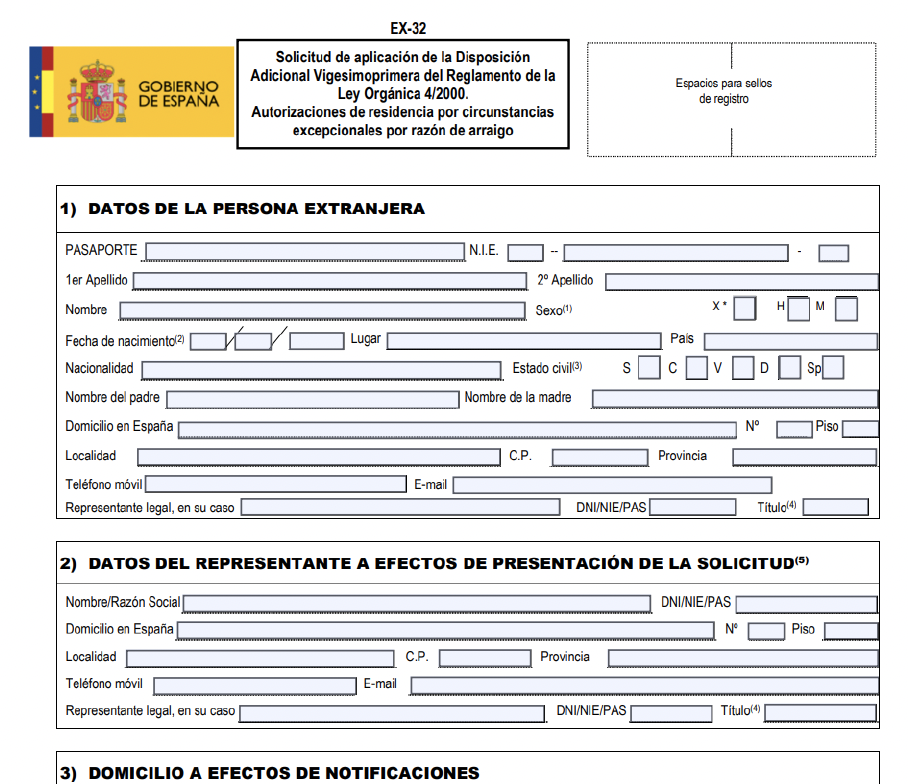
- Form EX-32.
- Form 790, code 052 (38.28 euros).
Specific documentation depending on the option selected:
Option A — Employment relationship:
- Having worked during their stay in Spain: employment history.
- Provide proof of your intention to work as an employee: employment contract.
- Provide proof of intent to work as a self-employed individual: affidavit (Form EX-32).
Option B — Family unit:
- Birth certificate of the child or the applicant.
- Certificate of household registration.
Option C — Vulnerable situation:
- Vulnerability Certificate (Annex II, Form EX-32).
Key dates you won't want to miss
- Law effective as of: April 16, 2026.
- Application deadline: June 30, 2026.
- Fee: €38.28 (Form 790, code 052).
Before you begin: Follow these step-by-step instructions
This law is very new. There are some uncertainties, and the process may take some time. That's why we recommend that you:
- Seek help from a specialized organization before submitting anything.
- Gather all the necessary documents before applying.
- Vulnerability certificates are free of charge and can only be issued by entities registered as partners of the Immigration and Social Services Department.
A note about vulnerability reports
Registered entities have faced high demand since the law took effect. Starting this week, we expect local governments and public services to make appointments and streamlined procedures available for processing these certifications, and to recognize the role assigned to them by the law and act accordingly. People who need this certificate cannot be denied access due to a lack of institutional response.
The Immigration Service Provider Registry is an administrative designation that authorizes registered organizations to submit applications and, within the framework of this special regularization process, to issue certificates of vulnerability. This registration does not entail any funding or financial support from the government. To date, registered organizations have undertaken this role as a public service mission using their own resources.
Do you have any questions?
The process may seem complicated, but you don't have to go through it alone. If you're in the process of regularizing your status or know someone who is, please share this information. We're here to guide you every step of the way.
Email us at informe@mescladis.org and we'll get back to you.
In collaboration with

SHARE
The most read

Other articles


Become a member
Become a Mescladís member and support our initiatives for a more inclusive and cohesive community.