
Regenerative Tourism: What We Learned at the 2026 GX Summit in Cambodia
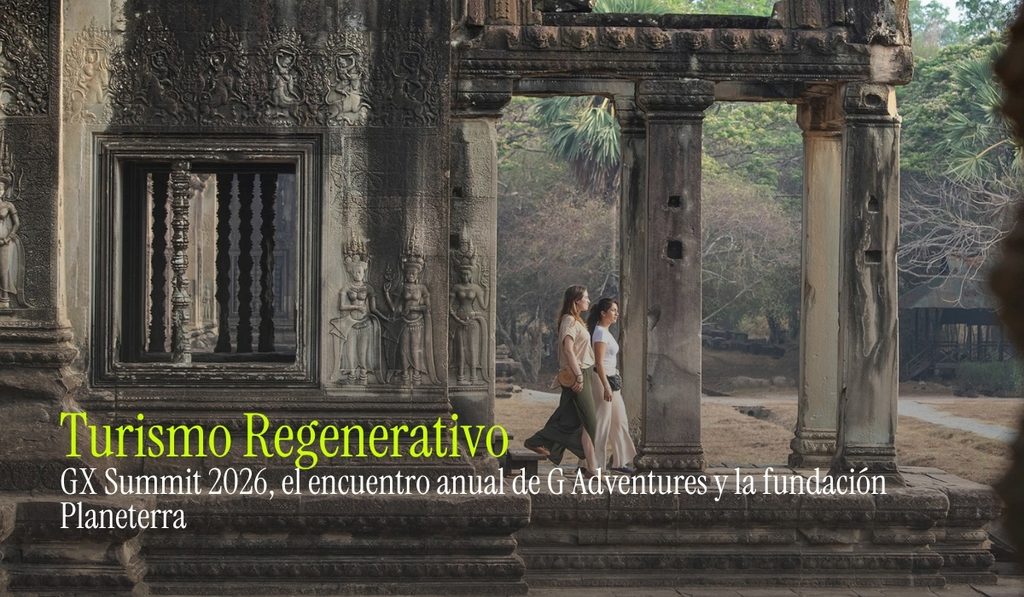
Mescladís participated in the GX Summit 2026, the annual gathering organized by G Adventures and the Planeterra Foundation . In Cambodia, we saw that tourism can go beyond simply doing no harm: it can leave places—and people—better off than it found them.
For years we've been talking about sustainable tourism: traveling without leaving a footprint. But what if that footprint were exactly what we're looking for? What if every trip could sow the seeds of something: a trade, an income, a tradition that isn't lost?
With that question in mind, we traveled to Cambodia. G Adventures chose the country as the host for its 2026 GX Summit, held in September, which brought together between 600 and 650 participants. According to the Summit program, GX has raised more than $1.5 million to directly fund Planeterra’s network of community-based enterprises around the world.
Planeterra: Turning Travel into Impact
Planeterra is a nonprofit organization founded in Toronto, Canada, in 2003, spearheaded by Bruce Poon Tip, founder of G Adventures. Its mission is to support community-based tourism enterprises led by women, young people, Indigenous peoples, and rural communities, and to break down the barriers that prevent them from benefiting from tourism. Its first project was a weavers’ cooperative in Ccaccaccollo, Peru.
For Planeterra, community-based tourism consists of experiences that belong to the communities themselves and are led and managed by them: nonprofit organizations, cooperatives, community-based organizations, and social enterprises. Its shared goal with G Adventures— Project 300—is to integrate 300 community-based tourism businesses into G Adventures’ trips by 2030.
The figures in its 2025 impact report illustrate the scope of its work: community-based tourism generated $3.3 million for local businesses; its network brings together 568 organizations, 276 of which are already connected with tour operators; there were 124,717 visitor trips, and 254,941 people benefited from its tourism and climate initiatives. In addition, Planeterra and its partners have planted 2,650,000 trees through a nature-positive approach to community-based tourism.
The GX Summit is its major showcase. The first edition of the Global Community Tourism Summit was held in Cusco, Peru, with more than 400 participants visiting four communities.
What Is Regenerative Tourism?
Regenerative tourism goes a step beyond sustainable tourism. While sustainability seeks to minimize negative impacts, regeneration aims for a net positive impact: for tourism to restore ecosystems, strengthen the local economy, preserve traditional knowledge, and give communities back control over how their territory is portrayed and experienced. It’s not just about visiting a place, but about taking part in caring for it.
It is based on three principles: the benefits remain in local hands; the community makes the decisions and plays a leading role in the experience; and culture and nature are treated as assets to be cared for, not as mere backdrops.
Revitalizing Trades: Kitchens That Shape
In Cambodia, we find projects that mirror our own. In Phnom Penh, Friends The Restaurant—run by Friends-International and Mith Samlanh—trains vulnerable youth in the hospitality industry within a fully operational restaurant. In Siem Reap, SPOONS welcomes about 75 young people each year into a 12-month program, reviving Cambodian cuisine while paving the way to employment. And New Hope uses the proceeds from its restaurant-school to fund education, healthcare, and clean drinking water for nearly 480 students in the Mondul Bei community.
Revitalizing Traditions and the Local Area
Regeneration is also woven into the fabric of daily life. On Silk Island, 30 women work with silk at the center, and another 300 do so from their villages, without having to leave their families. Villageworks employs more than 300 artisans, many of whom have disabilities, and transforms about 30 metric tons of recycled material each year. The Cyclo Conservation and Careers Association keeps Phnom Penh’s cyclo tradition alive by providing decent work for older drivers, and the Tuk Tuk Lady Association opens up the tourist transportation sector in Siem Reap to women.
And the landscape is protected: in Kampong Phluk, on the shores of Tonlé Sap, more than a thousand community-run boats support families who live in harmony with the lake; in Sambor Prei Kuk, a UNESCO World Heritage Site, every visit helps preserve the temples and keeps about 40 weavers employed.
What We're Bringing to Barcelona
We return with a suitcase full of something that won’t fit through any customs checkpoint: the certainty that we are not alone. In Phnom Penh and Siem Reap, we saw kitchens that educate, looms that support families, and boats that keep a lake alive, and in each of those projects we recognized our own way of understanding gastronomy: as a place to learn a trade, regain dignity, and build bridges between cultures. Cambodia inspires us to view our work through the lens of regenerative tourism, to think of those who visit us from abroad as allies who can contribute to our mission, and to continue weaving an international network of organizations that share the same conviction: that traveling, eating, and coming together can be acts of transformation. We bring back ideas, contacts, and, above all, a desire for what we experienced there to take root here—at our tables and in our neighborhoods. For years, we’ve talked about sustainable tourism: traveling without leaving a footprint.
But what if our footprint were exactly what we're looking for? What if every journey could sow the seeds of something: a trade, an income, a tradition that isn't lost?
Planeterra https://planeterra.org/
G Adventures https://www.gadventures.com/
SHARE
The most read
Other articles
Become a member
Become a Mescladís member and support our initiatives for a more inclusive and cohesive community.