
Massa Mare · Kintsugi: Turning Leftovers into a Meeting Place
A new edition of *Massa Mare* invites us to look at what has been broken—not from the perspective of loss, but from the perspective of the possibility of transforming it.
There are scars that cannot—and should not—be hidden. Marks that tell the story of where we come from, what we’ve been through, and how we’ve learned to rebuild ourselves. This is the starting point for the new edition of *Massa Mare*, the theatrical project spearheaded by Mescladís and co-produced with La Otra Orilla, which once again brings the performing arts, critical thinking, and collective experience into dialogue.
After exploring concepts such as migration, borders, and the relationship between science, nature, and consciousness, Massa Mare continues to evolve. This time, it does so through the lens of Kintsugi, the Japanese art of repairing broken pieces while making their fractures visible.
But here, Kintsugi is no longer just about objects.
It's about us.
When "repairing" doesn't mean going back to the way things were before
In Kintsugi, a crack is not erased. It is repaired and highlighted. The scar becomes part of the piece’s history, and what seemed like an imperfection is transformed into a new form of beauty.
Building on this metaphor, the new edition of *Massa Mare* raises a collective question: What happens when we apply this approach to healing to individuals, communities, and society?
Personal and social fractures can leave their mark, but they can also become spaces from which to rebuild. It’s not about romanticizing the wounds or hiding their causes, but rather about acknowledging them and asking ourselves what we’re going to do about them.
How can they fix it without erasing it?
How do we build community after a breakup?
What can we learn from our scars?
And, above all, how can we turn reparation into a collective act?
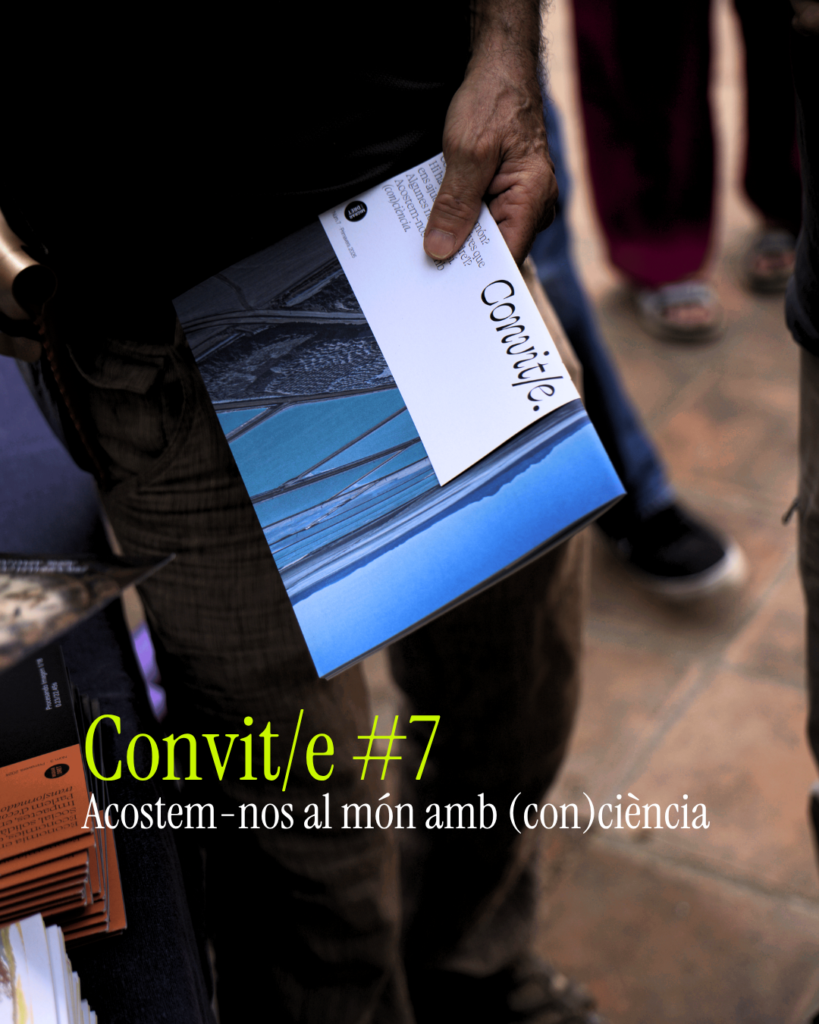
These questions are also part of the world explored in Convit/e No. 8, which is dedicated to kintsugi and the possibility of envisioning social fractures as starting points for building societies that are more inclusive, diverse, and capable of forging new bonds.
A gathering that isn't really a gathering
"Massa Mare" is not a conventional play.
It is a deconstructed theatrical gathering, a meeting of art and thought in which music, dance, poetry, the spoken word, the body, and gastronomy coexist in the same space.
Each edition is created from scratch. The space that hosts it, the people who participate in it, and the theme of Convit/e become the raw material for creativity. The dramaturgy provides a structure, but leaves room for the artists to experiment, engage in dialogue, and improvise.
There is only one rehearsal before the performance.
And this is precisely where *Massa Mare* finds one of its greatest strengths: in the fragility of what is not yet fully established. In that moment when different artistic languages come together without knowing exactly what will happen next.
Like a large mass, the project requires time, engagement, and transformation.
A single foundation capable of giving rise to different forms.
Fermentation is creating life together
The project's name is no coincidence.
Fermentation serves as a metaphor for what happens when different people, disciplines, and experiences share a space. Elements that initially seem independent begin to influence one another, transform, and create something that did not exist before.
Massa Mare arises precisely from this tension: between the spontaneous and the induced, between speed and pause, between what we know and what is still strange to us.
In a society marked by immediacy and by discourses that often turn difference into distance, this proposal advocates precisely the opposite: embracing contradiction, listening to other languages, and transforming difference into shared ground.
Because even the unknown can eventually become familiar.
Art, Education, and Social Transformation
Massa Mare is part of the Convit/e ecosystem, Mescladís’ cultural program that brings together publishing projects, educational initiatives, community engagement, and artistic creation.
The performance does not, therefore, end on stage.
The process also includes meetings and shared spaces with Mescladís students, connecting artistic creation with education and social transformation. This dimension is part of the creative process itself: the experiences, languages, memories, and perspectives of the people who participate can also become material for reflection and creation.
Massa Mare aims to create spaces where it is possible to pause, listen, and reflect with others. To use art not only to represent the world, but also to ask ourselves how we want to live in it.
The beauty of what has been restored
The next Massa Mare invites us to take another look at the left.
Not to hide them from you.
Not exactly to return to the point just before the breakup.
If not to acknowledge that they, too, are part of who we are.
Kintsugi reminds us that repairing can mean building something different. And that, sometimes, what keeps us together isn’t the absence of fractures, but the way we choose to care for them.
Massa Mare is fermenting again.
And this time, she does so through scars, healing, and the possibility of rebuilding a shared life.
Six Voices, Different Perspectives
For Kintsugi, Massa Mare will bring together six voices from very different linguistic backgrounds and career paths: Kayed Hammad, a journalist and Gaza-based interpreter; Dalia Hammad, co-author of *Menú de Gaza*; Mikel Ayestaran, a correspondent specializing in conflict zones and co-founder of 5W; composer and guitarist Pau Figueres; composer and singer Dafné Kritharas; and actor Joan Arqué.
Testimonials, journalism, music, the body, and performance will come together in a single space to explore the same reality from different perspectives.
What is reality? How will these perspectives intersect? And what will happen when they all converge in the same place?
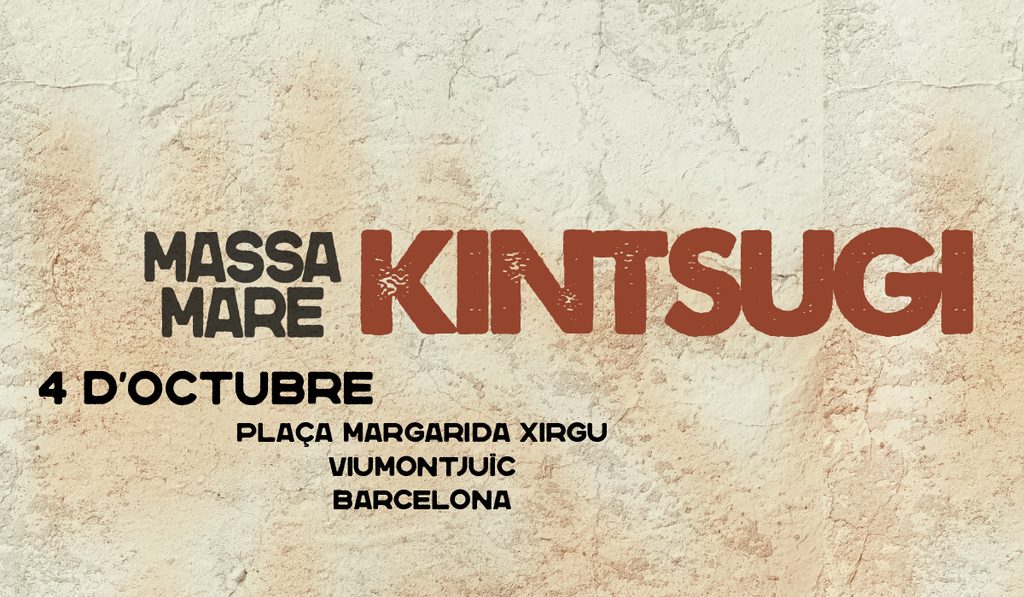
MASSA MARE · KINTSUGI
October 4, 2026
Plaça Margarida Xirgu · Barcelona
Viu Montjuïc
SHARE
The most read
Other articles
Become a member
Become a Mescladís member and support our initiatives for a more inclusive and cohesive community.