
Convit/e No. 6: Frontiers
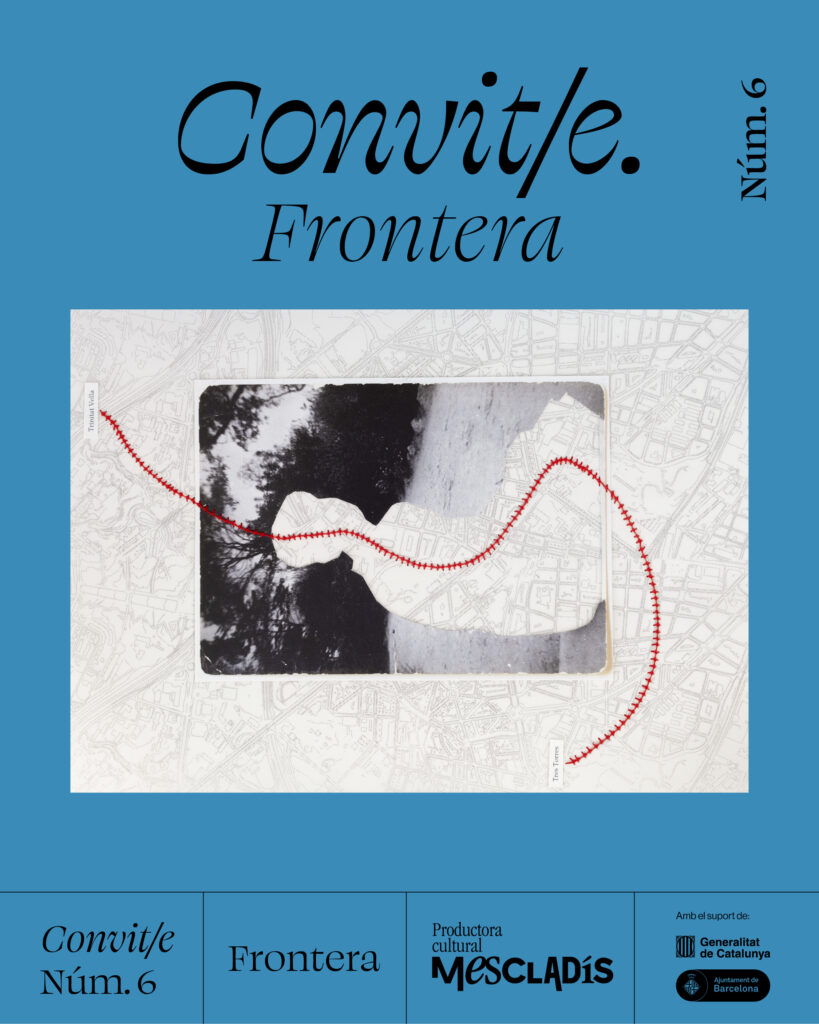
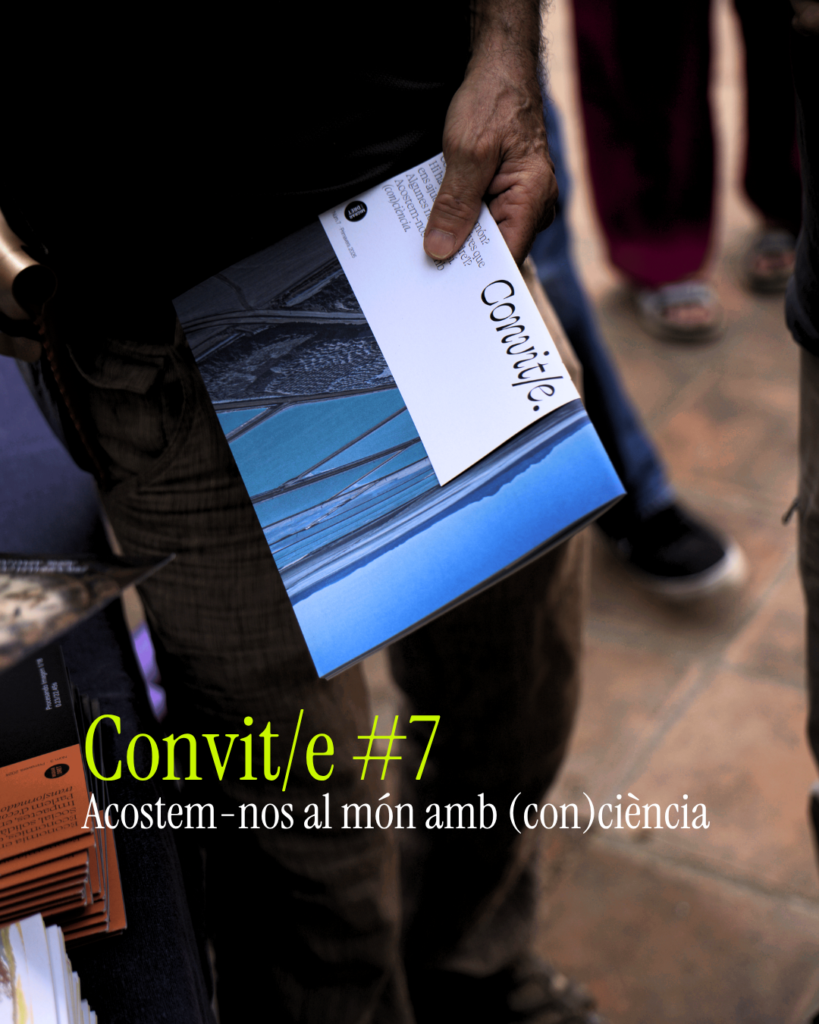
A new issue of Convit/e, the Mescladís magazine, is out this October, and it does so with an urgent question: how can we continue to think of borders as they have been told to us? This issue invites us -or even challenges us- to break with that rigid gaze that turns the border into a wall, into a machinery of exclusion, into an architecture of fear. It proposes to imagine other possibilities, other horizons, other ways of living together.
From the first page, the magazine presents itself as something that moves and transforms: gas, liquid and solid. Flowing thought. Ideas that escape from established frameworks. Reflections that overflow and erode the single narrative that associates migration with threat. Convit/e is, in essence, an invitation to disobey those logics, to recover the political imagination and to listen to the voices that survive, resist and create beyond -and in spite of- borders.
Imagining other horizons
Martin Habiague (Mescladis)
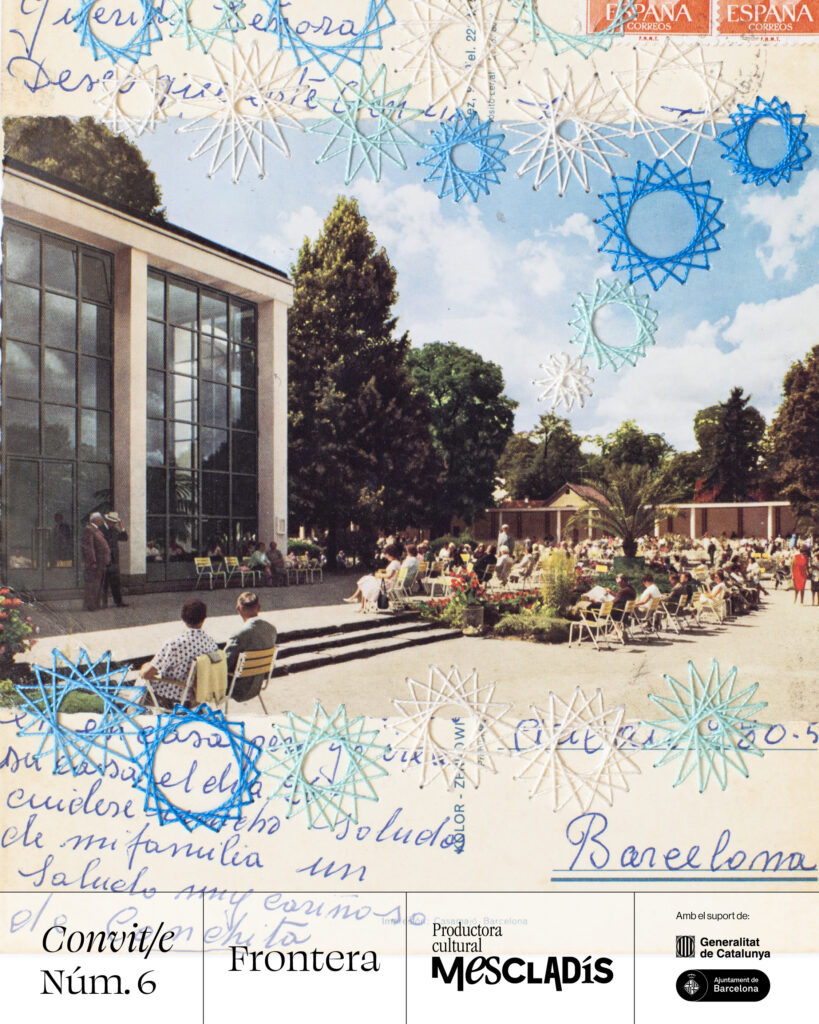
We live in a time when the border is no longer just a line drawn on a map. It is a political device, an architecture of fear, a machinery that classifies, impedes, dissuades. It is, more and more, a mental wall rather than a physical one. What concerns us most - from Mescladís, from our daily practice with migration, culture and rights - is that the way we manage these borders responds to a war logic: a war on the migrant. This logic has been consolidated for decades until it seems unquestionable. As if it had been dictated by the gods. As if no other model had ever existed, or could ever exist. We have naturalized control, exclusion, surveillance. We have accepted that Frontex - with its growing budget and its systemic opacity - is presented to us as a solution when in reality it is part of the problem.
But why are we unable to imagine another way of understanding borders? What if the problem is not the bodies that cross, but the ideas that do not move? What if the real collapse is not in the reception systems, but in our political imagination?
This model does not work. We see it every day. Migrants will continue to move, even if it means risking their lives. Europe responds to a restless public opinion by staging: walls, visas, detentions, externalization of borders, it has been doing this for more than 40 years. It has been doing so for more than 40 years. Has it worked? No. Because migration is a necessity, a right, a human impulse. And no, it is not an invasion or a threat. It is a historical constant. What is new - and tragic - is the lethal response: more than 29,000 people have died trying to reach Europe since 2014. An ignored tragedy that should shock the continent. A tragedy that will shame future generations.
In parallel, the right to asylum is being eroded. In Spain, three out of four refugee applications are rejected. People fleeing extreme violence are left in an irregular situation, losing their rights, their voice, their legal dignity. And it is not enough to cross the border. The logic of exclusion continues inside. From administrative mistreatment - impossible appointments, laws that change, papers that do not arrive - to the difficulty of validating studies and life trajectories. A climate of legal and social suspicion is imposed that blocks the recognition of diversity as an essential part of our collective identity.
However, we are still here. Fighting, creating, contributing. In the kitchen or in the classroom, in the street or on the stage. The migrant is not a problem, but a possibility. A richness, a promise and a reality. Because what does work -although it is not said- is the contribution of migrants, both in the countries of origin and destination: remittances that sustain entire economies, creativity, knowledge, resilience, growth. In Europe and in cities like Barcelona, with an aging population and social systems under stress, migrants are indispensable. Why is this fact so strongly denied?
There is a cruel paradox here. If Europe were no longer attractive for migration, we would not see it as a victory for border control. It would be a symptom of decline, we would consider it a failure. We would hold congresses with economists, sociologists and businessmen to look for solutions. And yet, today we celebrate the opposite: that it should be stopped, blocked, expelled. How did we arrive at this delirium? We are trapped in a single narrative that presents migration as a threat, a burden or an anomaly. But that narrative is false. And it prevents us from thinking.
What are the political, social and cultural consequences of not daring to imagine another horizon? Who benefits from this paralysis? The time has come to disobey this framework. To ask ourselves not how to control migration, but how to accompany it with justice. To stop talking about integration as if there were only one culture to adapt to, and to start talking about coexistence and reciprocity. Migration is not an exception: it is the very history of humanity. It is not a matter of opening or closing borders as if they were floodgates. It is about opening minds. And hearts. Of recovering the right to imagine. Of re-appropriating the right to migrate.
What if we start there?
Welcome to the Convit/e
Subscribe to Convit/e
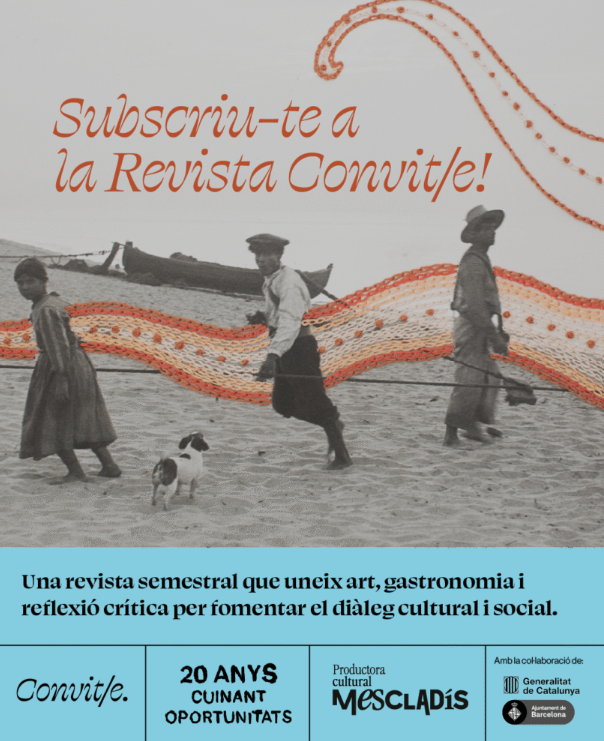
Convit/e is the biannual magazine of Mescladís that unites critical reflection, art and gastronomy from an intercultural perspective. With your subscription you support our social and cultural projects and receive:
- 2 issues printed per year
- 1 exclusive postcard
- 1 small token gift
SHARE
The most read

Other articles


Become a member
Become a Mescladís member and support our initiatives for a more inclusive and cohesive community.