
Diversity on the table, rights on the agenda
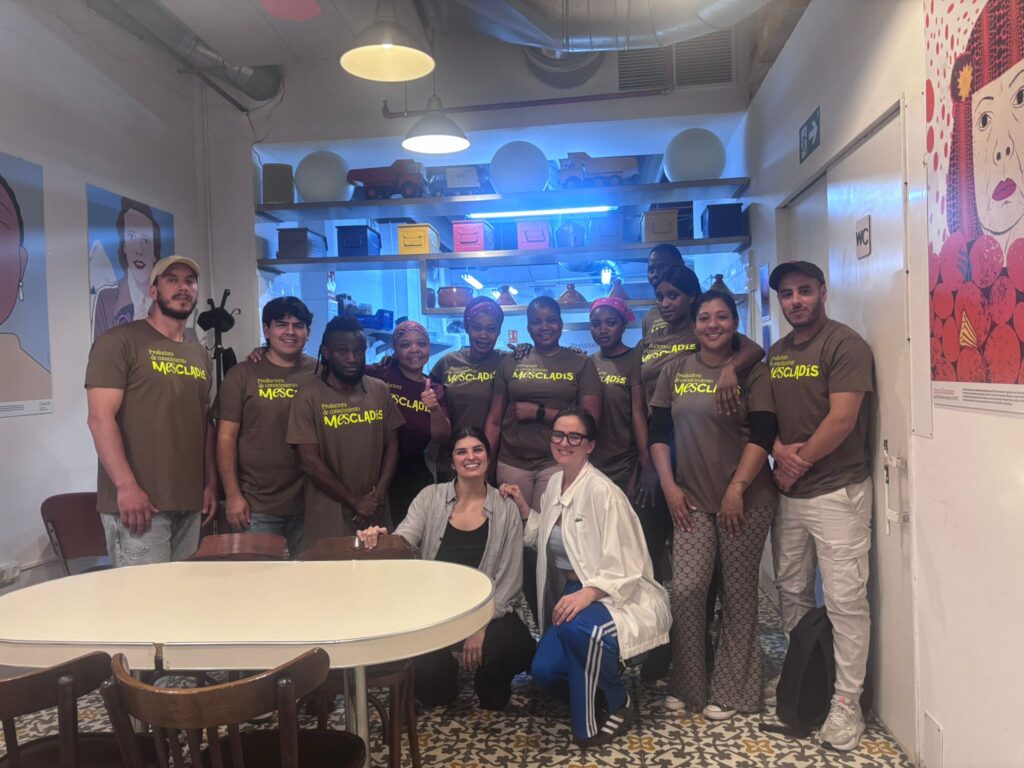
Soufiane arrived in Barcelona just three months ago when I met him. He went to the
interview to enter the pre-employment training program Cuinant Oportunitats of the
Fundació Mescladís. I was new there too, learning the rules and without realizing it,
also reproducing the ones that made no sense. At that time we demanded,
responding to the rules of foreigners, three years of census registration to be able to
access and Soufiane told me that I had them.
At the end of his training, after seeing him stand out for his attitude, empathy and talent in the kitchen,
wanted to hire him. That's when we learned that he hadn't had enough time on the job to be able to
do so. "Sometimes, if it's for an opportunity like working, lying isn't so bad,"
told me and he was right. He didn't know it but he had taught me that the willingness to participate and
contribute should outweigh any bureaucracy. And also that my good intentions
without action and critical thinking, would remain just intentions.
In today's times we can no longer talk about migration with empty formulas.
We need management models that stop being bureaucratic labyrinths and start
sustaining themselves in practice and real life. Agenda 2030 is just around the corner and as
Soufiane taught me, good intentions alone are not enough. We have to
start thinking about lasting inclusion policies that respond to a model of
sustainable migration management. And by that I mean a model that gives you the
tools to help yourself. And how do you help yourself if not
through access to work?
In Spain, migrants have been responsible for driving nearly 80%
of GDP growth since 2019. According to the European Central Bank, in a context of
aging and low birth rate, increased migration and higher labor participation
of foreign people have been key to sustain the country's economy. In addition, in
2024 we send around 700 billion dollars in remittances to low and middle income countries
. According to the International Organization for Migration, this figure
exceeds official development assistance and foreign direct investment combined.
In addition to the economic value contributed there and here, work is what allows us
people to inscribe ourselves in a field of meanings, links and recognition. It is to participate
of the common. Psychoanalysis pointed this out long ago: work is not only an economic activity
but a fundamental means of socialization. And in this relational character lies
its powerful social value. Therefore, guaranteeing access to employment is an indispensable condition
for social transformation to stop being an empty discourse and become a real and sustainable tool
. It is also one of the parameters that measure the quality of a
democracy.
Even so, what experience and data confirm, it seems that public administrations
do not quite understand. In Spain, for example, migrants must
wait at least two years to have access to a decent job. We are required to arrive and survive
with violated rights in order to be able to start the procedure to apply for that
job. As if it were a survival prize or a favor instead of a fundamental right
.
In that period, the country loses the possibility of generating greater economic value and tax revenues
from day one. It wastes the social capital that each person can contribute to
their work and community. It is, in short, wasting the true essence of the work of
including and where even worse, it reinforces the criminalizing vision of the migrant person,
deepening the gap and feeding inequality.
Therefore, in addition to immediate access to employment as a policy of sustainable inclusion, it is
here where I believe the most urgent work of inclusion is at stake: in generating spaces of
listening and tolerance where questions outweigh certainties. We have to
invite us to stop coexisting and consuming only with those who think alike.
To speak of social inclusion implies, from the outset, recognizing the existence of differences and
acting so that these do not translate into inequalities. It is not about fitting someone into what
already exists; it is about transforming what exists so that we all fit in. It implies transforming the
framework itself: eliminating barriers, rethinking norms and opening spaces. It is an active exercise,
that requires negotiation and listening.
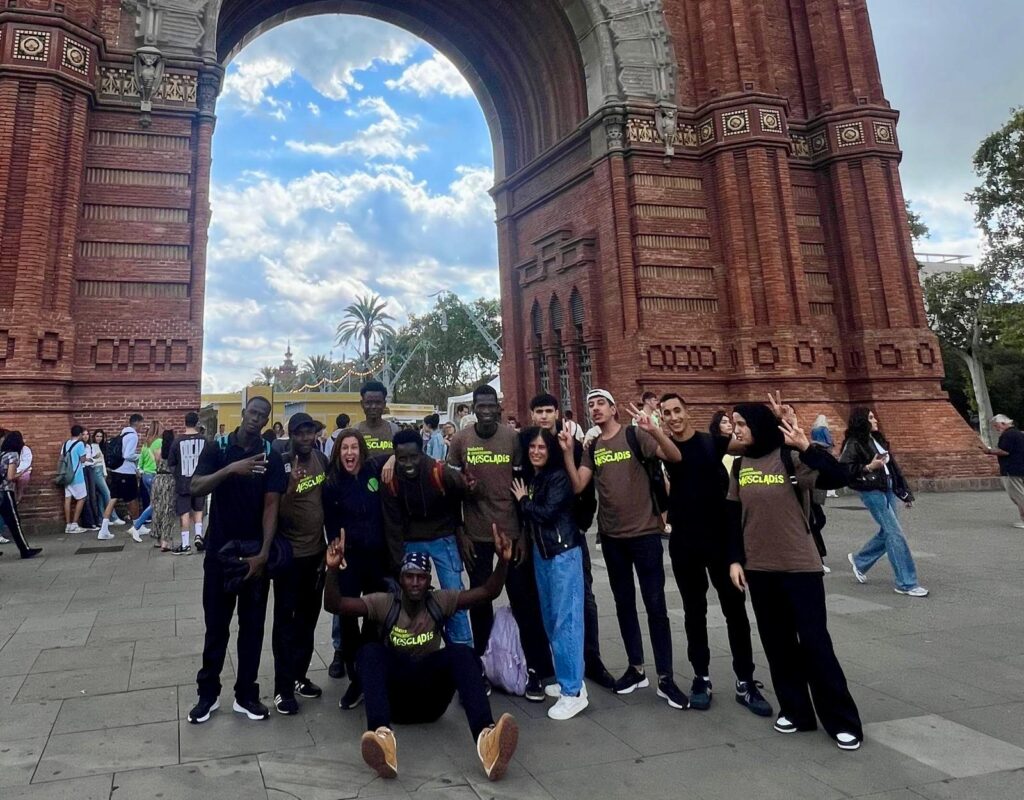
The case of the hospitality sector is an interesting example. It represents one of the
main economic and employment drivers in Spain. In 2024 it generated more than 1.6
million jobs, equivalent to almost 8% of the national total. Its enormous
potential to promote employment is evident. But its relevance is not only economic: bars and
restaurants are meeting places. Social temples where conversation, celebration and
sharing take place. Places where the invitation to live together and share the space is on the
table. If to this we add diversity in flavors, faces and accents, we have between
hands an enormous potential for exchange. An opportunity to begin to build
bridges from relaxed environments. Closer to enjoyment and far from fear.
It is urgent to create inclusion mechanisms that use the market to promote
rights and make diversity visible in all its forms. We need to create more
spaces for exchange where diversity, in all its forms, becomes visible.
We need to start looking at each other's faces more and ask more questions. Because the question
precedes tolerance.
Today Soufiane is my colleague. Together we are part of a team that
accompanies every year 250 people who, like him at the time, seek in the training
the tools to help themselves through access to work. We
make food a tool to value diversity and the market an ally
to promote opportunities. This is just an example of what is possible and if
we can, then it is possible.
Note: Victoria Ghio, Knowledge Production Manager
Published in Economic Alternatives
SHARE
The most read
Other articles
Become a member
Become a Mescladís member and support our initiatives for a more inclusive and cohesive community.