
Flavor and Art: Dones Valentes, a dialogue between the stage and the palate
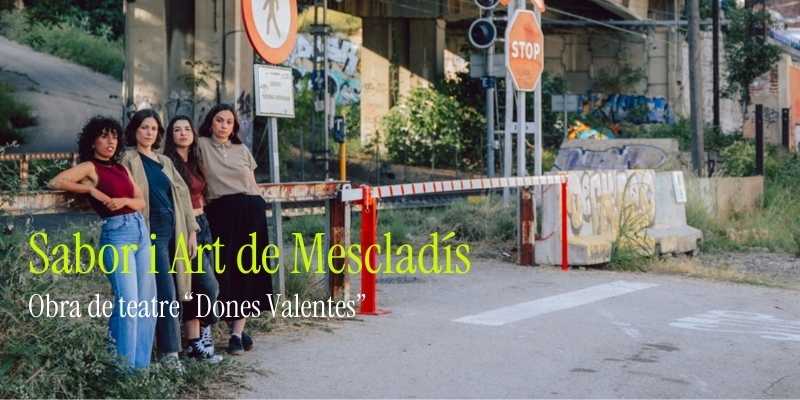
When art and gastronomy come together, the dining table becomes a space for reflection, remembrance, and collective creation. This is the spirit of Sabor i Art, an initiative that connects the theatrical world of the Teatre Lliure with the training program for students at Cuinant Oportunitats de Mescladís.
Drawing on the themes of the scheduled performances, students and artists come together to translate theatrical language into culinary language. The result is a dish inspired by the emotions, conflicts, and questions that emerge on stage.
On this occasion, the event featured the cast of *Dones Valentes* (Brave Women), a play directed by Glòria Balañà and co-written with Aina Tur, based on the book of the same name by journalist Txell Feixas. The production brings to the stage real-life testimonies of women from the Middle East and Asia—from places such as Lebanon, Gaza, Syria, Afghanistan, and Kurdistan—who have survived various forms of patriarchal, war-related, or religious violence. Their stories speak of resistance, dignity, and survival, tracing an emotional map of struggle and hope.
The challenge of turning pain into culinary art

Translating these stories into culinary terms is a complex challenge.
The goal is not merely to create a dish, but to craft a symbolic experience capable of evoking emotions. At times, the aim is even to unsettle the diner, inviting them to pause and reflect.
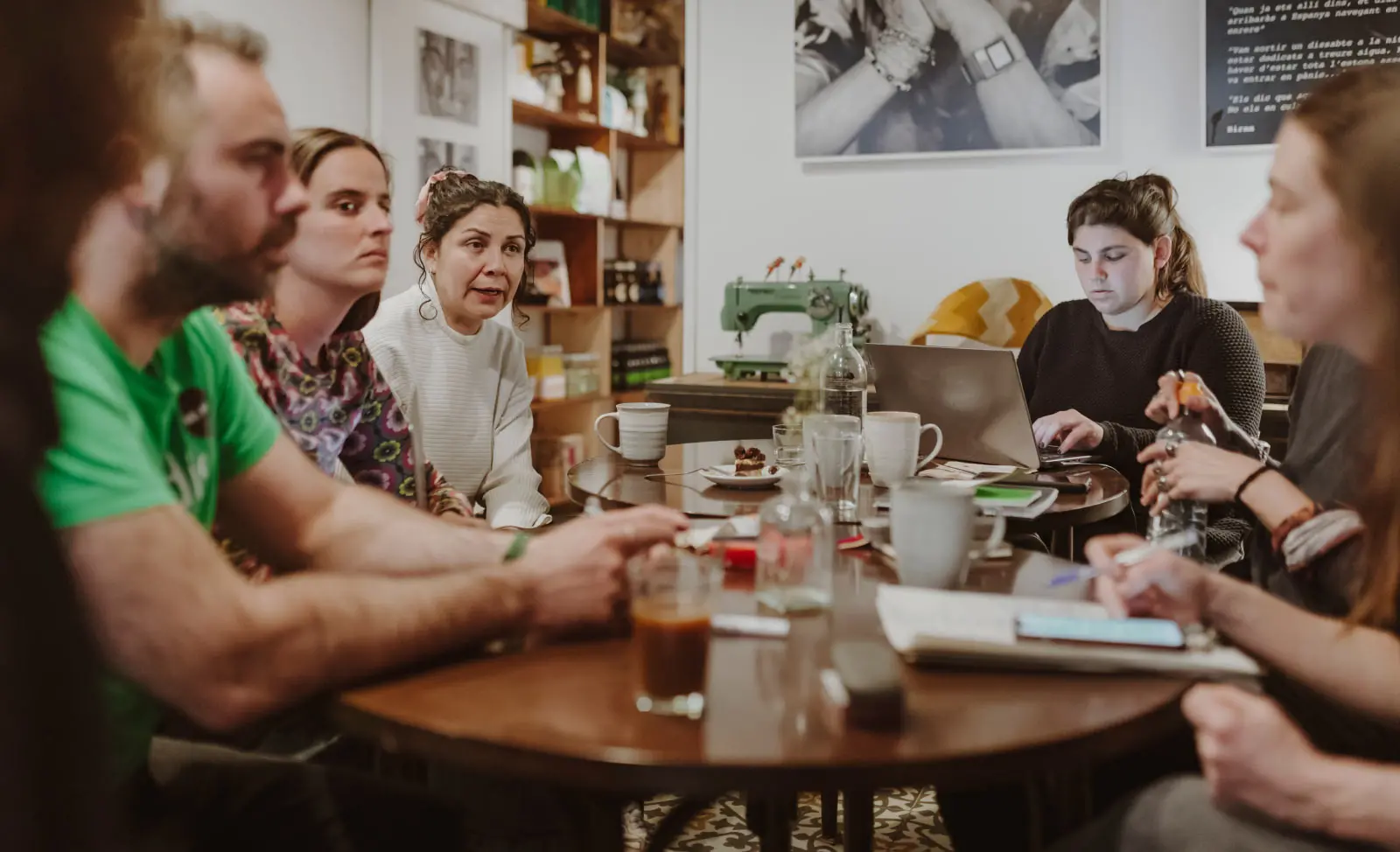
During the meeting with the students, the process began by identifying the emotions conveyed by the work: outrage, anger, resistance, fear, dignity, and hope. From there, a group discussion ensued on how these emotions can be expressed through flavors, textures, and contrasts.
Cooking thus became a tool for processing, understanding, and sharing difficult stories, creating a bridge between the artistic experience and the gastronomic experience.
The suggestion: a tapa full of contrasts
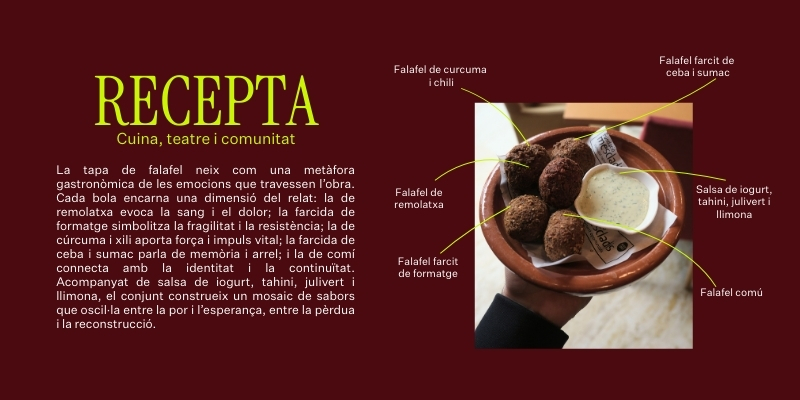
The final concept took shape as a conceptual cover designed to capture the tensions present in the work.
Each ingredient will be chosen for its symbolic significance:
Falafel
It depicts the arid desert landscape and the harsh conditions in which many of the protagonists of these stories live.
Remolatxa
, featured in some of the sculptures, symbolizes the bloodshed and sacrifice that many women endure in situations of violence.
Turmeric and Spicy
An intense combination that evokes anger, rage, and, at the same time, the transformative power of the women’s struggle.
Sumac
Its piercing acidity introduces a sharp note that evokes the structural violence and the weight of the injustices that run through these stories.
Yogurt and Spice Sauce A gentle counterpoint that brings balance to the whole and symbolizes resilience, community, and the possibility of change.
A gathering that transforms
Beyond the culinary result, the value of the process lies in the gathering.
For the students of Cuinant Oportunitats, these types of activities expand their technical training to include a conceptual and creative dimension that is rarely found in culinary schools. Cooking ceases to be merely a culinary practice and becomes an act of interpretation, dialogue, and social awareness.
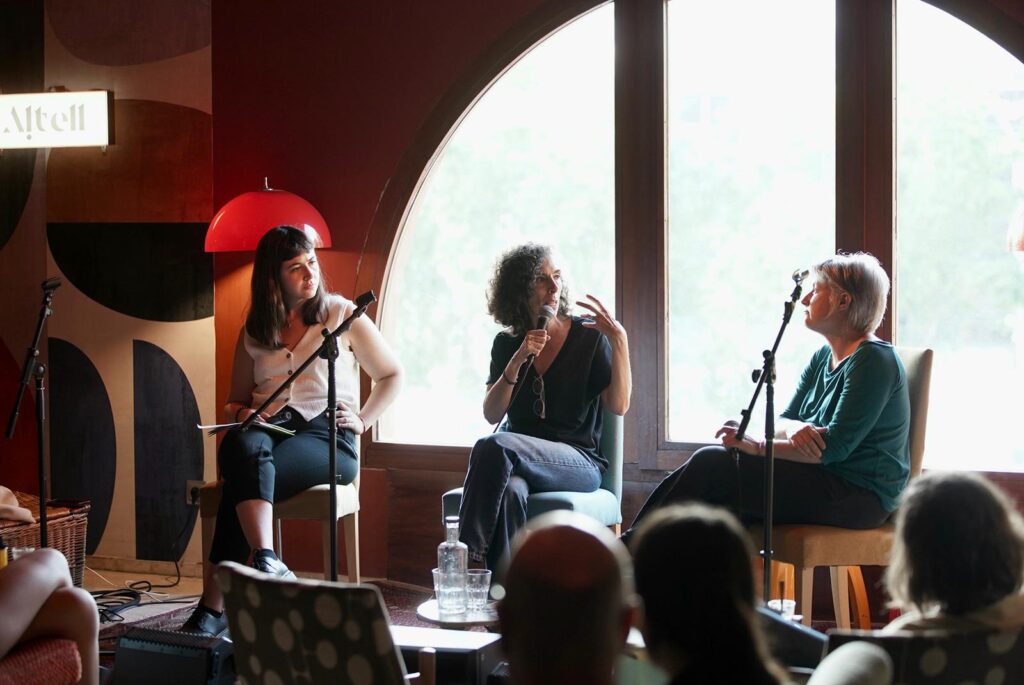
Sharing the tasting with the actresses and the creative team brought everything full circle: the table became a space for conversation where art and gastronomy engaged directly with those who bring the stories to life on stage.
This exchange reveals the true meaning of Sabor i Art:
—to make cooking a language capable of listening to, interpreting, and accompanying the stories that theater brings to the table.
Because sometimes a dish can also be a way of explaining the world.
SHARE
The most read
Other articles
Become a member
Become a Mescladís member and support our initiatives for a more inclusive and cohesive community.